

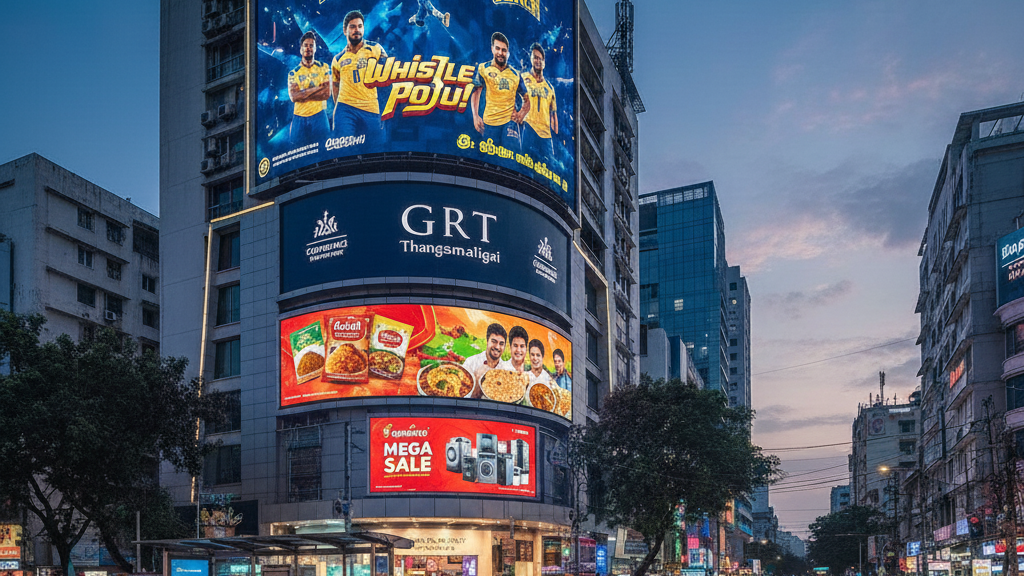
The streets of Chennai, Madurai, and Coimbatore are no longer just bustling hubs of commerce; they have become vibrant canvases for the next generation of marketing: Tamil DOOH. Digital Out-of-Home (DOOH) advertising has bridged the gap between traditional static billboards and the dynamic world of digital marketing. By blending the cultural richness of the Tamil language with cutting-edge LED technology, brands are finding more impactful ways to connect with audiences in real-time.
For businesses looking to penetrate the South Indian market, understanding the nuances of Tamil DOOH is no longer optional—it is a strategic necessity. Whether it is a colorful display at a bus shelter in T. Nagar or a massive digital screen overlooking a flyover, this medium is redefining how consumers interact with brands during their daily commute.
What Exactly is Tamil DOOH?
To put it simply, Tamil DOOH refers to digital advertising displayed in public spaces across Tamil Nadu and Tamil-speaking regions, utilizing digital screens rather than traditional printed posters. This includes:
-
Digital Billboards: Large-format screens located near highways and busy intersections.
-
Transit Displays: Screens found in metro stations, airports, and bus terminals.
-
Place-Based Media: Digital signage in malls, cinemas, and corporate parks.
What sets Tamil DOOH apart is the localization of content. It isn’t just about translating English ads into Tamil; it is about capturing the linguistic nuances, cultural sentiments, and local humor that resonate with the 75 million-plus Tamil speakers worldwide.
Why Tamil DOOH is Reaping High ROI for Brands
In a world where people are increasingly “ad-blind” to digital banners on their phones, Tamil DOOH offers a refreshing, unblockable alternative. You cannot “skip” a 40-foot digital screen while you are stuck in traffic on Mount Road.
1. High Visibility and Recall
Unlike mobile ads that compete with a dozen other notifications, a digital screen occupies a physical space in the real world. Research shows that DOOH advertising has a much higher recall rate because it reaches consumers when they are active and alert.
2. Dynamic Content Capabilities
With Tamil DOOH, brands are no longer stuck with one image for a month. Advertisers can swap creatives instantly. A retail brand can show a “Good Morning” message with a coffee ad at 8:00 AM and switch to a dinner deal at 7:00 PM.
3. Hyper-Local Targeting
If a brand wants to target the tech-savvy crowd in OMR (Old Mahabalipuram Road), they can run ads specifically on those screens. Tamil DOOH allows for surgical precision in geographic targeting, ensuring that marketing budgets are spent where the target demographic actually lives and works.


The Role of Data and Automation in Tamil DOOH
The “Digital” in Tamil DOOH doesn’t just mean it’s on a screen; it means it is smart. Modern digital out-of-home platforms in Tamil Nadu are increasingly integrated with Programmatic technology.
Programmatic Buying
Programmatic DOOH allows advertisers to buy screen time based on specific “triggers.” For example, an umbrella brand could set a trigger so that their ad only appears on digital screens in Chennai when the local weather API reports rain. This level of relevance was impossible five years ago.
Audience Analytics
Many Tamil DOOH installations now come equipped with sensors and AI-driven cameras that can estimate the number of eyeballs on a screen, the average dwell time, and even the basic demographics of the crowd. This data helps brands move away from “guesstimates” toward actual, measurable performance metrics.
Cultural Context: Why “Tamil” Matters in DOOH
You might wonder why we specify Tamil DOOH instead of just “Digital Advertising.” The answer lies in the deep-seated pride and connection the people of Tamil Nadu have with their language.
-
Emotional Resonance: An ad that uses colloquial Tamil or references local festivals like Pongal creates an immediate emotional bond.
-
Trust Factor: Consumers are more likely to trust a brand that “speaks their language” literally and figuratively.
-
Narrative Strength: Tamil culture is rooted in storytelling. Tamil DOOH allows brands to tell micro-stories through 15-second animations that feel like a part of the local environment.
The Growth Drivers of Digital Signage in Tamil Nadu
Several factors have converged to make Tamil DOOH the fastest-growing segment of the local media industry:
-
Urbanization: The rapid expansion of “Smart Cities” in Tamil Nadu has led to better infrastructure, providing more locations for high-quality digital screens.
-
Decreasing Hardware Costs: The cost of high-definition LED panels has dropped, making it affordable for local vendors to upgrade from static to digital.
-
The Rise of the Metro: The Chennai Metro has been a game-changer for Tamil DOOH, offering a premium, captive audience in a controlled environment.
-
Internet Penetration: With high-speed 5G connectivity, syncing content across a network of 500 screens in different cities can now happen in seconds.
Creative Strategies for Effective Tamil DOOH Campaigns
If you want your Tamil DOOH campaign to stand out, you need to think beyond the static image. Here are some proven strategies:
-
Keep it Brief: Most viewers have between 5 to 8 seconds of “glance time.” Your core message and brand logo must be clear immediately.
-
Bold Typography: Since the Tamil script is intricate, use bold, clean fonts that are readable from a distance.
-
Motion Graphics: Use subtle movement. A flickering “Buy Now” button or a sliding product image catches the eye much faster than a still photo.
-
QR Code Integration: Encourage interaction. A Tamil DOOH screen can display a QR code that users can scan at a bus stop to get an instant discount coupon on their phones.
Challenges and Considerations
While the future of Tamil DOOH is bright, it isn’t without its hurdles. Advertisers must navigate:
-
Regulatory Compliance: Different municipal corporations have different rules regarding brightness levels and the placement of digital screens to avoid distracting drivers.
-
Maintenance: Unlike a vinyl poster, a digital screen can have “dead pixels” or connectivity issues. Choosing a reliable network provider is crucial.
-
Content Overload: With so many screens popping up, there is a risk of visual clutter. Creativity is the only way to cut through the noise.
Case Study: A Success Story in Tamil DOOH
Imagine a local jewelry brand during the Diwali season. Instead of one massive billboard, they deployed a Tamil DOOH strategy across 50 screens in Madurai and Trichy.
The screens displayed a live countdown to a “Midnight Flash Sale.” As the clock ticked down, the excitement in the streets grew. By using real-time data to update the countdown, the brand saw a 40% increase in footfall compared to the previous year when they only used static posters. This is the power of urgency and real-time engagement that only digital screens can provide.
Future Trends: What’s Next for Tamil DOOH?
We are just scratching the surface of what Tamil DOOH can do. In the coming years, expect to see:
-
Anamorphic 3D Displays: These are screens that create a “3D pop-out” effect. Imagine a virtual Rajinikanth or a brand mascot appearing to step out of the screen onto the streets of Chennai!
-
AI-Personalization: Screens that can detect the general mood of a crowd and adjust the colors or music of an ad accordingly.
-
Interactive Kiosks: Touch-screen Tamil DOOH units where users can browse a catalog or book a ticket directly from the sidewalk.
Conclusion: Embracing the Digital Shift
The transition toward Tamil DOOH is a reflection of a modern, tech-forward Tamil Nadu. For brands, it offers an unparalleled opportunity to be present in the consumer’s physical journey while maintaining the flexibility of digital media. By combining local cultural insights with global technological standards, Tamil DOOH is set to remain the powerhouse of South Indian advertising for the foreseeable future.
If you are a business owner or a marketing professional, now is the time to explore how digital screens can amplify your message. The streets are talking—is your brand part of the conversation?
Frequently Asked Questions (FAQs)
1. Is Tamil DOOH more expensive than traditional billboards?
Initially, the “per slot” cost might seem higher. However, when you factor in the lack of printing/installation costs for every change and the higher engagement rates, Tamil DOOH often provides a much better Return on Investment (ROI) than static media.
2. Can I run different ads on different screens simultaneously?
Yes! One of the biggest advantages of Tamil DOOH is central control. You can run a “New Store Opening” ad in Coimbatore and a “Seasonal Sale” ad in Chennai from the same dashboard at the same time.
3. How do I measure the success of a Tamil DOOH campaign?
Success can be measured through various metrics such as “Impressions” (estimated views), footfall increases (tracked via mobile location data), and “Brand Lift” surveys. Many providers now offer detailed analytics reports.
4. What is the ideal length for a Tamil DOOH ad spot?
Most industry experts recommend a loop length of 10 to 15 seconds. This is long enough to deliver a message but short enough to ensure that passersby see the whole ad before moving on.
5. Does Tamil DOOH work for small local businesses?
Absolutely. Because you can buy “slots” or specific times of day, Tamil DOOH is actually more accessible for small businesses than large-scale static billboards, which often require long-term contracts.