

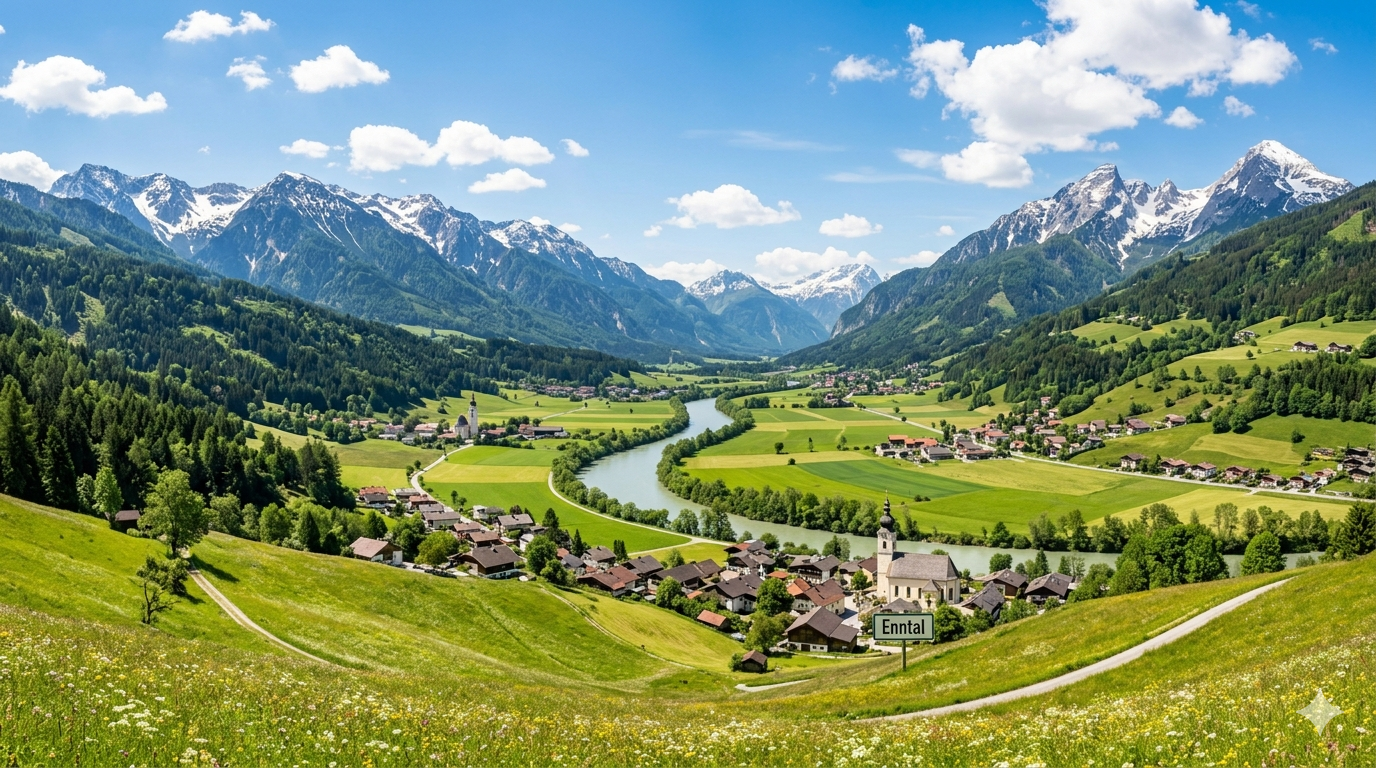
When you think of pristine alpine landscapes, the Enntal (Enns Valley) likely stands as one of the most picturesque regions that comes to mind. Stretching across the heart of Austria, this valley offers a unique blend of rugged mountain peaks and lush, fertile river plains. It is a place where tradition meets modernity, and where every winding road leads to a new discovery.
Whether you are an outdoor enthusiast looking for your next peak to climb or a history buff eager to explore ancient abbeys, the Enntal provides an unforgettable experience. In this guide, we will dive deep into what makes this region so special, from its geological origins to the vibrant communities that call it home today.
The Geological and Geographical Significance of the Enntal
The Enntal is not just a scenic corridor; it is a geological marvel shaped over millions of years. Carved out by the Enns River, the longest river residing entirely within Austrian borders, the valley serves as a natural border between the Northern Limestone Alps and the Central Alps. This positioning creates a dramatic contrast in scenery that few other regions can match.
On the northern side, you see the jagged, limestone giants like the Grimming, while to the south, the landscape softens into the rolling green slopes of the Schladminger Tauern. This diversity in terrain makes the Enntal a vital ecological hub, supporting a wide array of flora and fauna that thrive in these varying altitudes.
The Lifeblood of the Valley: The Enns River
The Enns River is the literal heart of the Enntal. It flows with a rhythmic grace, providing water for agriculture and energy for the local industry. Historically, the river was used for transporting timber and iron ore, fueling the economic engine of the Upper Styrian region for centuries. Today, it serves as a peaceful companion for cyclists on the Enns Cycle Path, one of the most famous long-distance biking routes in Europe.
Historical Landmarks and Cultural Heritage in the Enntal
History is etched into every stone found in the Enntal. Since the Middle Ages, the valley has been a crucial transit route connecting different parts of the Alps. This strategic importance led to the construction of impressive fortifications and religious centers that still stand today as a testament to the region’s enduring spirit.
Admont Abbey: The Library of the World
Perhaps the most iconic cultural site within the Enntal is Admont Abbey. Founded in 1074, it houses the world’s largest monastic library. The architecture is a breathtaking example of late Baroque style, featuring ceiling frescoes that depict the stages of human knowledge. Walking through these halls feels like stepping back into an era where art and spirituality were inextricably linked.
Medieval Fortresses and Castles
Beyond the abbeys, the Enntal is dotted with castles like Schloss Trautenfels. Perched on a rocky outcrop, this castle offers a panoramic view of the entire valley floor. It now serves as a museum dedicated to the natural and cultural history of the district, preserving the stories of the people who worked the land and defended these borders.
Outdoor Adventures in the Enntal
If you are looking for an adrenaline rush, the Enntal is essentially a giant outdoor playground. The region is world-renowned for its skiing infrastructure, particularly around Schladming, but its appeal lasts all year round. From paragliding over the valley to white-water rafting on the Enns, there is no shortage of ways to get your heart racing.
Winter Sports Paradise
During the winter months, the Enntal transforms into a snowy wonderland. The “Schladming 4-Mountain Ski Area” connects four major peaks, offering hundreds of kilometers of perfectly groomed slopes. It is a regular host for the FIS Alpine Ski World Cup, drawing thousands of fans who come to witness the world’s best athletes tackle the legendary “Planai” finish slope.
Summer Hiking and Mountaineering
Once the snow melts, a vast network of hiking trails is revealed. The Enntal caters to everyone from casual walkers to professional mountaineers.
-
The Grimming: Known as the “Mons Altissimus” of Styria, it is a challenging climb that rewards hikers with an unrivaled 360-degree view.
-
Wörschach Gorge: A family-friendly trail that leads through narrow rock passages and over rushing waterfalls.
-
Alpine Pastures: Many trails lead to traditional huts where you can sample locally produced cheese and speck.
The Economy and Modern Life in the Enntal
While tourism is a major pillar, the Enntal is far from being just a vacation spot. It is a living, breathing economic region with a focus on sustainable forestry, high-tech manufacturing, and organic farming. The balance between preserving nature and fostering innovation is a core value for the local residents.
Sustainability is a key focus here. Many of the towns within the Enntal have invested heavily in biomass energy and eco-friendly public transport. This ensures that the pristine environment which attracts visitors remains protected for future generations.
Culinary Traditions
You cannot truly understand the Enntal without tasting its food. The cuisine is hearty, designed to fuel farmers and mountain climbers alike.
-
Ennstal Steirerkas: A crumbly, spicy mountain cheese that is unique to this valley.
-
Krapfen: Often served with sauerkraut or jam, these fried dough pockets are a staple at local festivals.
-
Wild Game: Since the mountains are rich in wildlife, venison and chamois dishes are frequently featured on seasonal menus.
Essential Tips for Visiting the Enntal
Planning a trip to the Enntal requires a bit of foresight to make the most of the seasonal changes. Whether you arrive by train via the scenic Rudolfsbahn or drive through the Pyhrn Autobahn, the journey itself is a highlight.
1. Best Time to Visit:
-
June to September: Ideal for hiking, cycling, and exploring the lakes.
-
December to March: The prime window for skiing and snowboarding.
-
October: Perfect for seeing the autumn colors and attending traditional “Almabtrieb” festivals.
2. Transport within the Valley: The Enntal is well-connected by a regional train line that runs along the river. Many hotels also offer “Summer Cards,” which provide free access to mountain lifts and buses, making it easy to explore without a car.
3. Respecting the Environment: When hiking in the Enntal, always stick to marked paths. The alpine ecosystem is fragile, and local farmers rely on clean pastures for their livestock.
Future Outlook: Protecting the Enntal
As the world changes, the Enntal faces the challenge of climate change, particularly regarding receding glaciers and shorter ski seasons. However, the region is adapting. By expanding summer tourism and investing in cultural experiences, the people of the Enntal are ensuring their home remains vibrant regardless of the weather.
The focus is shifting toward “Slow Tourism”—encouraging visitors to stay longer, explore deeper, and connect more authentically with the local culture. This approach not only reduces the carbon footprint but also provides a more meaningful experience for the traveler.
Conclusion
The Enntal is much more than a geographical location; it is a sanctuary where nature, history, and modern life coexist in a beautiful, albeit delicate, balance. From the silent halls of Admont Abbey to the cheering crowds at a night slalom in Schladming, the valley offers a spectrum of experiences that cater to every soul.
If you are looking for a place to reconnect with the outdoors while immersing yourself in a rich cultural tapestry, look no further than the Enntal. It is a destination that stays with you long after you’ve left its mountain shadows, calling you back to discover the secrets hidden in its next peak or its next plate of mountain cheese.
Frequently Asked Questions (FAQs)
1. What is the best way to get to the Enntal?
The Enntal is easily accessible by both car and train. If you are coming from Salzburg or Graz, the train ride is particularly scenic, following the river through the mountains. For those flying in, Salzburg and Linz are the closest major airports, both approximately 1.5 to 2 hours away by car.
2. Is the Enntal suitable for families with young children?
Absolutely. The Enntal offers numerous family-oriented activities, including the Wörschach Gorge, adventure parks in Gröbming, and easy “fairytale” hiking trails. Most ski resorts in the area also have excellent ski schools and childcare facilities.
3. What is the most famous food in the Enntal?
The most famous local specialty is Ennstal Steirerkas. It is a unique, spicy, and crumbly cheese made in the alpine huts. It is often served on “Steirerkasbrot” or mixed into “Kasnockn” (a local version of mac and cheese).
4. Can I visit the Enntal if I don’t ski?
Yes! In winter, many visitors enjoy snowshoeing, horse-drawn carriage rides, or visiting the world-famous library at Admont Abbey. The region also boasts several thermal spas, such as the Grimming Therme, which are perfect for relaxation.
5. Are the hiking trails in the Enntal difficult?
The Enntal offers a range of trails for all skill levels. While some peaks like the Grimming require experience and a high level of fitness, there are hundreds of kilometers of valley walks and moderate mountain paths that are accessible to anyone with a decent pair of hiking boots.