


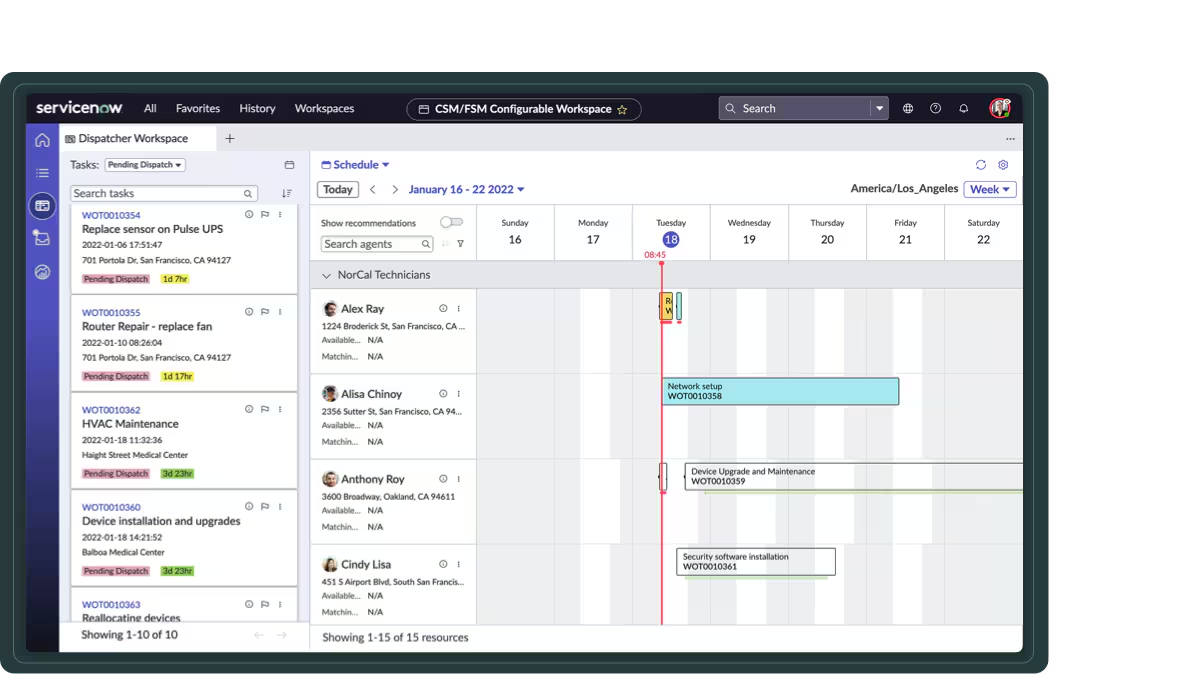
You need a system that gets the right technician to the right job at the right time without chaos, lost hours, or unhappy customers. Field service scheduling does exactly that by coordinating work orders, technician skills, parts, and routes so your team finishes more jobs reliably.
When you align scheduling with real-time data and automation, you cut downtime, prevent double bookings, and increase first-time fix rates—delivering faster service and lower costs. This article explains how effective scheduling works and shows practical ways to optimize your operations for smoother dispatching, better resource use, and measurable performance gains.
Understanding Field Service Scheduling
Field service scheduling assigns the right technician, with the right skills and parts, to the right job at the right time. It balances technician availability, travel, customer priority, and equipment needs to reduce downtime and improve first-time fix rates.
What Is Field Service Scheduling?
Field service scheduling is the process you use to plan, allocate, and sequence work orders for technicians in the field. You match technician skills, certifications, and inventory to each job while accounting for travel time and customer availability.
Modern systems add automation: rule-based assignment, route optimization, and real-time updates to handle cancellations or urgent requests.
Key components you should track:
- Technician skillset and certifications.
- Parts and tooling inventory per technician or vehicle.
- Job priority, time windows, and expected duration.
- Geographic location and travel time.
Use scheduling tools that surface conflicts (double bookings, missing parts) and let you reassign work quickly to keep service levels consistent.
Common Challenges in Field Service Scheduling
You face unpredictability from emergency calls, traffic delays, and last-minute cancellations. Those factors disrupt planned routes and create cascading reschedules that waste time and inflate travel costs.
Skill mismatch is another frequent issue; sending a technician without the right training or parts leads to repeat visits and unhappy customers.
Operational constraints that amplify those problems:
- Limited visibility into real-time technician location or inventory.
- Manual scheduling prone to human error.
- Inaccurate job duration estimates that skew daily plans.
Address these by using real-time location data, tighter job scoping, and dynamic reallocation rules to minimize idle time and improve first-time fixes.
Key Benefits for Businesses
Effective scheduling increases technician utilization and reduces travel costs, which directly improves your margins. You complete more jobs per day by minimizing gaps between appointments and avoiding unnecessary return visits.
Customer experience improves when you provide accurate arrival windows and timely updates, which lowers churn and increases repeat business.
Measurable gains you can expect:
- Higher first-time fix rate.
- Lower average travel time per job.
- Increased revenue per technician through better utilization.
Investing in scheduling tools and processes also gives you actionable data to optimize hiring, routing, and inventory placement over time.
Optimizing Field Service Scheduling Operations
You’ll focus on reducing travel time, matching skills to jobs, and using automation to keep schedules stable as conditions change. Prioritize measurable rules, real-time data, and integrations that eliminate duplicate work.
Best Practices for Efficient Scheduling
Apply clear prioritization rules: classify jobs by SLA, customer value, and urgency, then assign strict time windows for high-priority work. Use skill and certification matrices so technicians only receive jobs they can complete without follow-up visits.
Keep routes tight by grouping appointments geographically and respecting technician shift limits. Enforce minimum and maximum job durations to prevent unrealistic packing of work.
Track utilization and first-time-fix rate as primary KPIs. Run weekly short-interval reviews to adjust capacity or reroute resources. Use mobile confirmations and live ETA updates so dispatchers can detect slips early.
Maintain a contact protocol for missed appointments and a small buffer of reserve capacity for emergency work to avoid cascading disruptions.
Leveraging Automation and AI Tools
Use rule-based scheduling for baseline constraints (skills, location, availability) and AI-driven optimization for complex trade-offs like travel vs. priority. Implement automated travel-time calculations that use live traffic and historical patterns to set realistic appointment windows.
Adopt predictive arrival estimates and automated ETA notifications to customers. Let the system recommend reassignments when SLA risk rises; require human approval only for exceptions.
Train models on your historical first-time-fix and travel data to improve dispatch quality over time. Monitor model decisions with simple dashboards showing gains in travel reduction, on-time rate, and technician idle time to ensure continuous improvement.
Integration With Other Business Systems
Connect scheduling to CRM so job histories, SLAs, and customer preferences flow into dispatch decisions automatically. Sync with inventory and parts systems to ensure technicians receive only jobs for which they have required parts, or trigger parts procurement before assignment.
Integrate with workforce management for accurate availability, certifications, and overtime limits. Link telematics and GPS feeds to capture real-time location and travel status, enabling dynamic rerouting.
Ensure data consistency by mapping key fields (account ID, asset ID, service level) and using APIs or middleware for near-real-time updates. Log changes and decision rationale for audits and post-incident analysis.
