


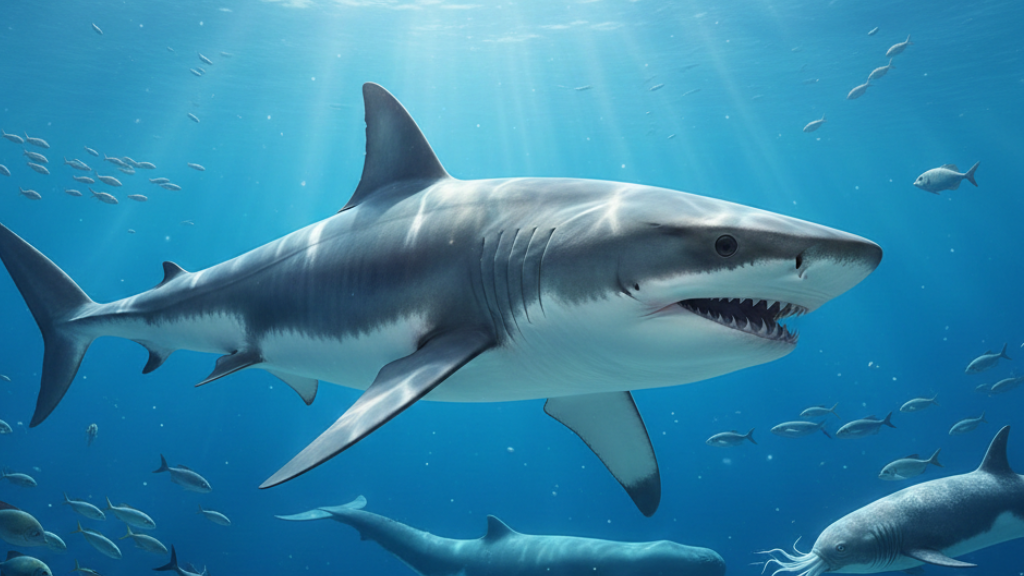
The history of our oceans is written in enamel and bone, hidden beneath layers of sediment and salt. Among the most intriguing figures in this aquatic history is Hastovenator, a genus of extinct mackerel sharks that once dominated the marine ecosystems of the Miocene and Pliocene epochs. Often referred to by enthusiasts and paleontologists as the “broad-toothed mako,” this predator serves as a vital bridge in our understanding of how modern apex predators came to be.
For decades, the classification of this shark was a source of heated debate within the scientific community. However, as more fossils come to light, Hastovenator has emerged as a distinct and formidable entity in the fossil record. It wasn’t just a random inhabitant of the deep; it was a highly specialized hunter that patrolled nearly every corner of the globe.
In this deep dive, we will explore the anatomy, evolutionary significance, and the mysterious disappearance of Hastovenator. Whether you are a dedicated fossil collector or a casual fan of marine biology, understanding this shark is essential to understanding the lineage of the modern Great White.
Understanding Hastovenator: The Broad-Toothed Predator
The name Hastovenator translates roughly to “spear hunter,” a fitting title for a creature defined by its lethal efficiency. Historically, the species most commonly associated with this genus, Hastovenator hastalis, was placed in several different categories. You might see it listed in older textbooks as Isurus hastalis or Cosmopolitodus hastalis.
The shift to the name Hastovenator represents a modern effort to accurately reflect the shark’s unique evolutionary path. Unlike the modern Shortfin Mako, which has narrow, needle-like teeth for grasping slippery fish, this shark possessed wide, flat, triangular teeth. These were designed for something much more substantial than small fish: they were built for tackling marine mammals.
While it shared the streamlined body of a mako, its dental structure hinted at a lifestyle much closer to that of the Great White. This blend of features makes Hastovenator one of the most fascinating case studies in convergent evolution and ancestral transitions.
The Taxonomic Journey: Is it Hastovenator or Cosmopolitodus?
To truly appreciate Hastovenator, we have to look at the “name game” that has followed it for over a century. Taxonomy—the science of naming and classifying organisms—can be incredibly messy when dealing with creatures that left behind only teeth.
For a long time, scientists grouped this shark with Makos (Isurus) because of the smooth edges of its teeth. However, as researchers looked closer at the tooth morphology and the way the roots were shaped, they realized it didn’t quite fit. This led to the creation of the genus Cosmopolitodus.
More recently, many paleontologists have adopted Hastovenator to further distinguish it from other lineages. This wasn’t just about being pedantic; it was about recognizing that this shark represents a specific evolutionary branch. It is the lineage that eventually lost its smooth edges and developed the serrations we see in modern Great Whites today.
Anatomy of a Hunter: How Big was Hastovenator?
One of the first questions anyone asks about a prehistoric shark is: “How big was it?” While we don’t have full skeletons of Hastovenator—since shark skeletons are made of cartilage and rarely fossilize—we can estimate size based on tooth dimensions.
Based on the largest recovered teeth, which can exceed 3.5 inches in length, experts believe that Hastovenator could reach lengths of 5 to 7 meters (16 to 23 feet). This puts it in the same size class as a large modern Great White, making it a massive presence in the Miocene oceans.
Key Anatomical Features:
-
The Teeth: The most defining feature of Hastovenator is its broad, flat, and unserrated teeth. These teeth allowed the shark to inflict massive “bite and spit” wounds on large prey.
-
The Body: It likely possessed a fusiform body shape, meaning it was spindle-shaped and tapered at both ends. This is the hallmark of a high-speed, open-ocean cruiser.
-
Thermoregulation: Like its modern relatives, it is believed that Hastovenator was partially warm-blooded (regional endothermy), allowing it to hunt in both temperate and colder waters.
The Great White Connection: An Evolutionary Debate
The most controversial and exciting aspect of Hastovenator is its relationship to the modern Great White shark (Carcharodon carcharias). For a long time, it was assumed that the Great White evolved from the Megalodon lineage. We now know that this is almost certainly incorrect.
Instead, Hastovenator is now widely considered the direct ancestor of the Great White. The transition is visible in the fossil record through a species known as Carcharodon hubbelli. This “transitional” shark possesses teeth that are shaped like those of Hastovenator but feature faint, evolving serrations.
This discovery changed everything. It proved that the Great White is essentially a “serrated mako” rather than a “miniature Megalodon.” By studying Hastovenator, we are looking at the prototype for the most famous predator in the ocean today.
Diet and Hunting Strategies of the Hastovenator
What did a 20-foot shark with smooth, broad teeth eat? The answer lies in the fossils of other animals found in the same strata. Hastovenator lived during a golden age of marine mammal evolution.
The Miocene seas were filled with small-to-medium-sized whales, early dolphins, and primitive seals. The smooth but sharp edges of Hastovenator teeth were perfect for slicing through the thick blubber and muscle of these mammals.
Hunting Methods:
-
Ambush from Below: Much like modern Great Whites, it likely used its dark dorsal coloring to blend into the depths before launching a vertical attack.
-
High-Speed Pursuit: Given its mako-like ancestry, Hastovenator was probably one of the fastest sharks of its time, capable of chasing down agile prey.
-
The Kill Zone: By targeting the flippers or the tail of a whale, the shark could immobilize its prey before moving in for the final, lethal bite.
The Global Reach: Where did Hastovenator Live?
The word “Cosmopolitodus” (one of its former names) literally means “cosmopolitan tooth,” and for good reason. Hastovenator was truly a global citizen. Its fossils have been found on every continent except Antarctica.
From the famous Sharktooth Hill in California to the phosphate mines of Morocco and the cliffs of Belgium, these teeth are a staple of the fossil record. This wide distribution tells us that the shark was highly adaptable. It could thrive in the warm, shallow inland seas and the deep, cold trenches of the open ocean.
If you were to go scuba diving 10 million years ago, regardless of whether you were in the Atlantic or the Pacific, there is a very high probability that a Hastovenator would have been the apex predator in the area.
Why did Hastovenator Go Extinct?
If Hastovenator was so successful and widespread, why isn’t it still swimming in our oceans today? The extinction of this genus (or rather, its transition) occurred around the end of the Pliocene. Several factors likely contributed to its disappearance.
1. Climate Change and Cooling Oceans
As the Earth entered a period of cooling, the sea levels dropped and the ocean currents changed. Many of the shallow, warm nurseries where Hastovenator pups would have grown up disappeared.
2. The Rise of Competition
While Hastovenator was large, it shared the water with the Megalodon and early pods of killer whales. Competition for the same food sources (whales and seals) became increasingly fierce.
3. Evolutionary Transition
In a sense, Hastovenator didn’t completely go extinct; it changed. As prey became tougher and more armored, the evolutionary pressure to develop serrated teeth increased. Eventually, the smooth-toothed Hastovenator was replaced by its more “efficient” descendant, the Great White.
Collecting Hastovenator Fossils
For fossil hunters, Hastovenator teeth are some of the most prized finds. They are often found in beautiful colors, ranging from jet black to creamy white and deep orange, depending on the minerals in the soil where they were buried.
Because the teeth lack serrations, they have a sleek, glass-like appearance that is quite different from the “rugged” look of a Megalodon tooth. When you hold a Hastovenator tooth, you are holding a piece of history that dates back millions of years—a literal weapon from a bygone era of the sea.
If you are looking to start a collection, these teeth are often more affordable than Megalodon teeth while being just as historically significant. They serve as a tactile reminder of the ocean’s ever-changing nature.
The Legacy of the Spear Hunter
The story of Hastovenator is a testament to the power of adaptation. It was a shark that found a winning formula and stuck with it for millions of years. It bridged the gap between the lightning-fast makos and the powerful, serrated predators that haunt our modern imagination.
By studying this ancient hunter, we gain a clearer picture of the Miocene world—a world of giant whales, shifting continents, and a shark that ruled them all with smooth-edged precision. Hastovenator remains a cornerstone of marine paleontology, proving that even without serrations, you can still be the king of the sea.
Conclusion: Why Hastovenator Still Matters
In the grand timeline of Earth’s history, Hastovenator occupies a pivotal chapter. It represents the moment when sharks shifted their focus toward marine mammals, a move that would eventually lead to the rise of the modern Great White. Its fossils are more than just rocks; they are the blueprints of modern apex predators.
Understanding Hastovenator allows us to appreciate the delicate balance of the marine ecosystem and the incredible journey of evolution. Next time you see a Great White on a nature documentary, remember that its power began millions of years ago with a smooth-toothed “spear hunter” patrolling the ancient depths.
Would you like to learn more about how to identify specific Hastovenator teeth from different fossil sites?
Frequently Asked Questions (FAQs)
1. How can I tell the difference between a Hastovenator tooth and a Mako tooth?
While both belong to the same broader family, Hastovenator teeth are significantly broader and flatter. Modern Mako teeth (Isurus) tend to be narrower and more “dagger-like,” designed for grasping fish. Hastovenator teeth look like a wide triangle and are usually larger than those of modern Makos.
2. Was Hastovenator faster than a Great White?
It is highly likely. Because Hastovenator had a more streamlined, mako-like body structure, it was probably built for higher sustained speeds. While the Great White is built for power and “burst” speed, the anatomy of Hastovenator suggests a more agile, high-velocity hunter.
3. Did Hastovenator live at the same time as Megalodon?
Yes, they were contemporaries. Hastovenator and Otodus megalodon shared the oceans for millions of years during the Miocene and Pliocene. While Megalodon hunted the largest whales, Hastovenator likely focused on smaller whales, dolphins, and pinnipeds (seals), occupying a slightly different niche.
4. Why are some Hastovenator teeth called “Extinct Giant Makos”?
This is a common “layman’s term” used by fossil collectors. Since the shark was originally classified in the genus Isurus (Makos) and reached much larger sizes than any living Mako today, the name stuck. However, scientifically, it is more accurate to refer to them as Hastovenator or Cosmopolitodus.
5. Where are the best places in the world to find Hastovenator fossils?
The most famous location is Sharktooth Hill in Bakersfield, California. Other significant sites include the Bone Valley region in Florida, the Antwerp area in Belgium, and the phosphate mines of Morocco. These locations were once ancient seabeds where the sharks were extremely abundant.
